

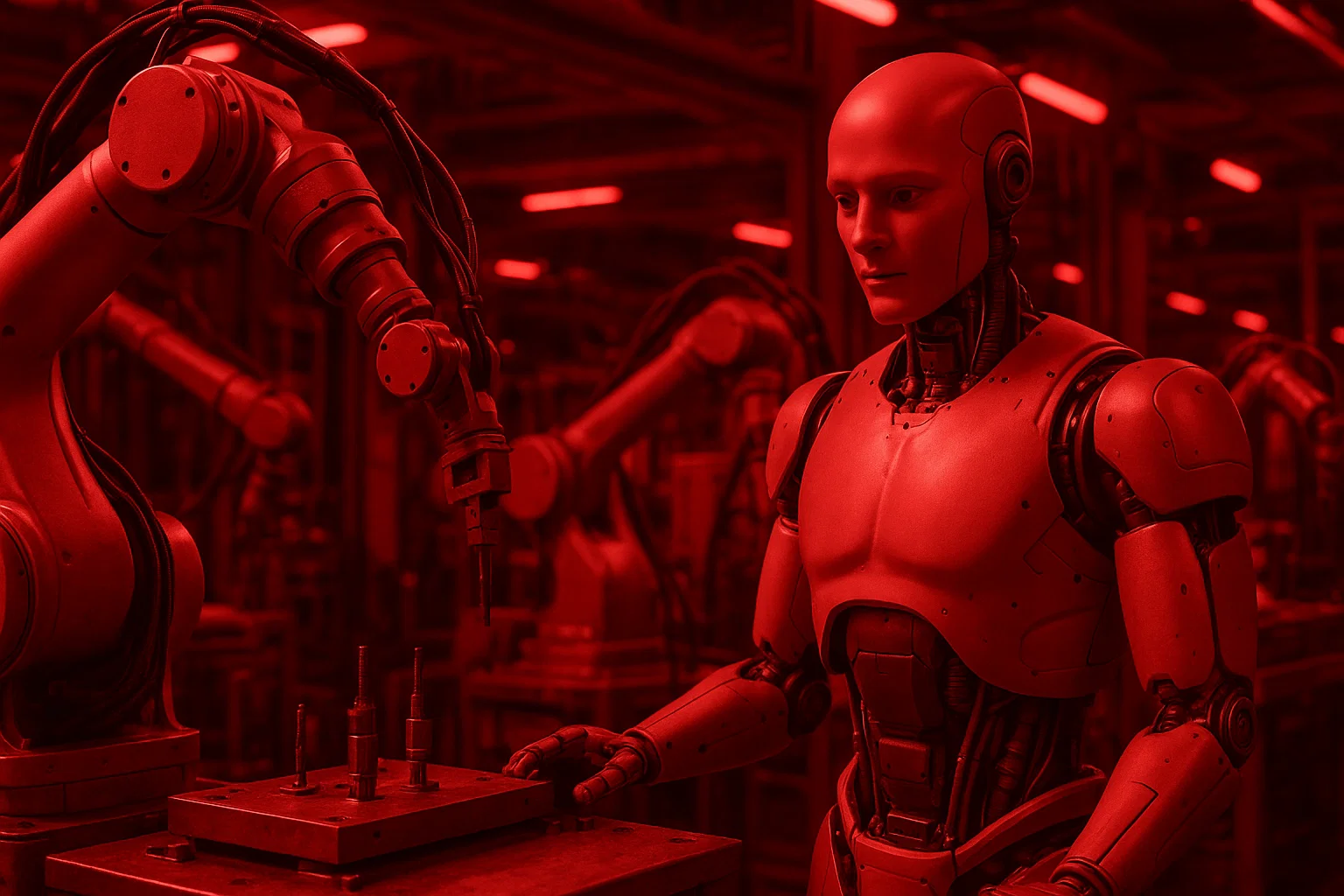
On November 11, 2026, Panasonic Holdings introduced a Manufacturing Commons initiative, undertaking identify KMC, to develop AI and robotics reference fashions in Japan via trade, authorities and educational collaboration and deploy them throughout workplaces.
KMC is a part of a broader effort to speed up field-driven Physical AI, making use of AI to bodily workplaces by combining it with manufacturing experience. The corporate needs to enhance analysis, design and manufacturing processes as AI use extends past digital environments.
The proposed studying loop begins with AI studying from staff’ expertise, abilities and judgments. Employees use the ensuing evaluation and proposals, and the brand new information and information generated via that work return to the AI for additional studying. Panasonic’s purpose is steady, two-way studying between folks, workplaces and AI throughout analysis, design and manufacturing settings.
Beneath KMC, organizations would share manufacturing applied sciences, information and human connections throughout company and organizational boundaries. Panasonic’s acknowledged ambition is to pool Japanese manufacturing capabilities right into a globally aggressive manufacturing mannequin.
The announcement additionally factors to the Know-how Division’s 2040 technology vision, which pairs expertise growth with associate co-creation. It identifies AI and cyber-physical methods, which join digital evaluation with bodily operations, as widespread applied sciences throughout analysis areas together with robotics, sensing and model-based approaches.
Manufacturing Information and Course of Functions
The technique attracts on greater than a century of producing expertise in supplies, units, sensing, management and manufacturing processes. It additionally makes use of expert staff’ strategies and strategies for turning bodily phenomena into usable information, giving the AI effort a base in manufacturing facility operations in addition to software program.
One manufacturing space named within the announcement is glass-type perovskite photo voltaic cells. Panasonic’s supplies expertise and inkjet coating, laser processing and sealing strategies from show manufacturing allow power-generating glass for home windows and partitions. The corporate plans to make use of informatics and AI for supplies growth and process-condition optimization; enterprise exercise started with gross sales of pre-mass-production items in September 2026, and full mass manufacturing is focused for April 2029 on the Nagahama mass-production expertise growth website in Shiga Prefecture.
The semiconductor work focuses on superior back-end gear for three-dimensional chip stacking and different next-generation manufacturing makes use of. It combines plasma floor modification, precision bonding, printing, inspection and transport applied sciences. A newly began AI Semiconductor Packaging Undertaking unites analysis and enterprise growth, with AI evaluation of course of information and inspection pictures meant to help high quality prediction, process-condition searches and gear specs.
T-Rex Offers a Robotics Instance
A separate Panasonic research release dated November 5, 2026 reveals the sort of robotics work behind the technique. Panasonic Holdings and Panasonic R&D Firm of America developed T-Rex with researchers from UC Berkeley, NVIDIA, Stanford College, Sapienza College of Rome and ItalAI. The system integrates fingertip tactile data right into a vision-language-action mannequin, which turns pictures and natural-language directions into robotic actions, permitting actions to be corrected as contact circumstances change.
T-Rex generates its broad actions via a vision-and-language module working at about 5 Hz, or 5 updates per second, whereas a tactile module corrects movement at about 20 Hz. This enables responses to slipping or over-pushing with out repeating slower picture recognition for each adjustment. The T-Rex paper paperwork a 100-hour tactile-rich dataset and the variable-rate Combination-of-Transformers structure that accommodates these completely different processing charges.
Panasonic stories a 65% common success charge throughout 12 real-world contact duties, in contrast with 35% for its strongest comparability methodology and 42% when tactile data was eliminated. The analysis included web page turning, transferring eggs, making use of toothpaste, unlocking locks, eradicating playing cards and screwing in lightbulbs, requiring delicate drive management and work with deformable objects.
Panasonic targets future makes use of together with inserting, eradicating and tightening elements in manufacturing and dealing with versatile or fragile gadgets in logistics, with the targets of decreasing employee burden and easing labor shortages. KMC’s central check is whether or not shared manufacturing information may help flip analysis outcomes resembling T-Rex into reusable reference fashions throughout manufacturing and logistics workplaces.
