


Sure, you may schedule Substack Notes. You are able to do it in two methods: immediately in Substack or by way of Buffer, which helps you to plan Notes on the identical calendar as your different channels, ship the identical Observe to LinkedIn, Threads, X, and Bluesky, and see which Notes introduced in subscribers. Each are free.
We’ll stroll by way of the way it works, the place Substack’s built-in scheduler falls quick, and what I’ve realized from scheduling a Observe daily this month for Buffer’s personal publication.
Tips on how to schedule a Observe inside Substack
Substack added native scheduling for Notes on March 23, 2026, on net, iOS, and Android. Earlier than that, the one choices had been a third-party extension or posting manually.
Here is the way it works on the net:
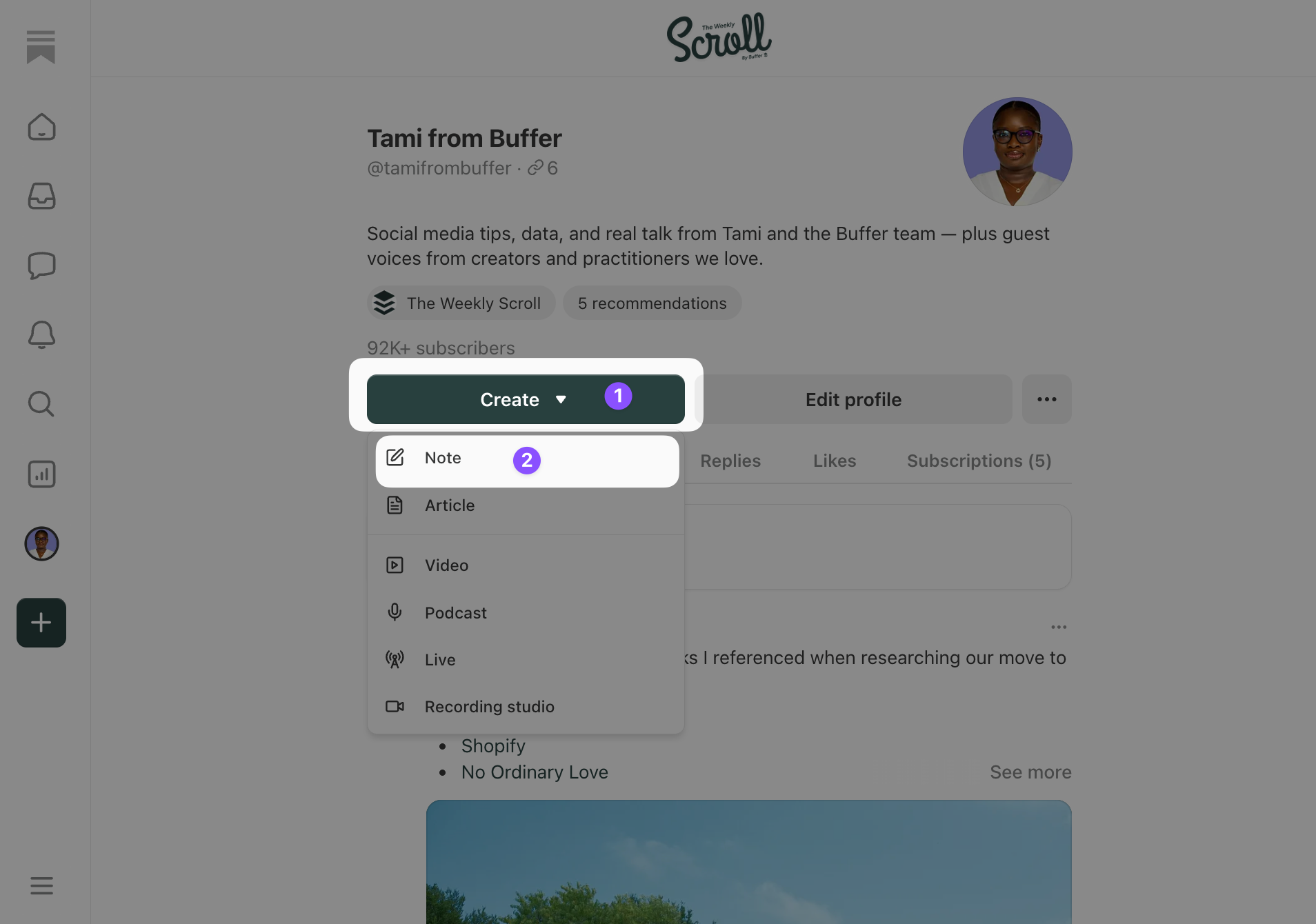
- Open Substack and click on the plus + button, then Observe (or Create → Observe in case you’re in your profile) to begin a brand new Observe.
- Write the Observe as you usually would. You’ll be able to add pictures, hyperlinks, video, and create polls.
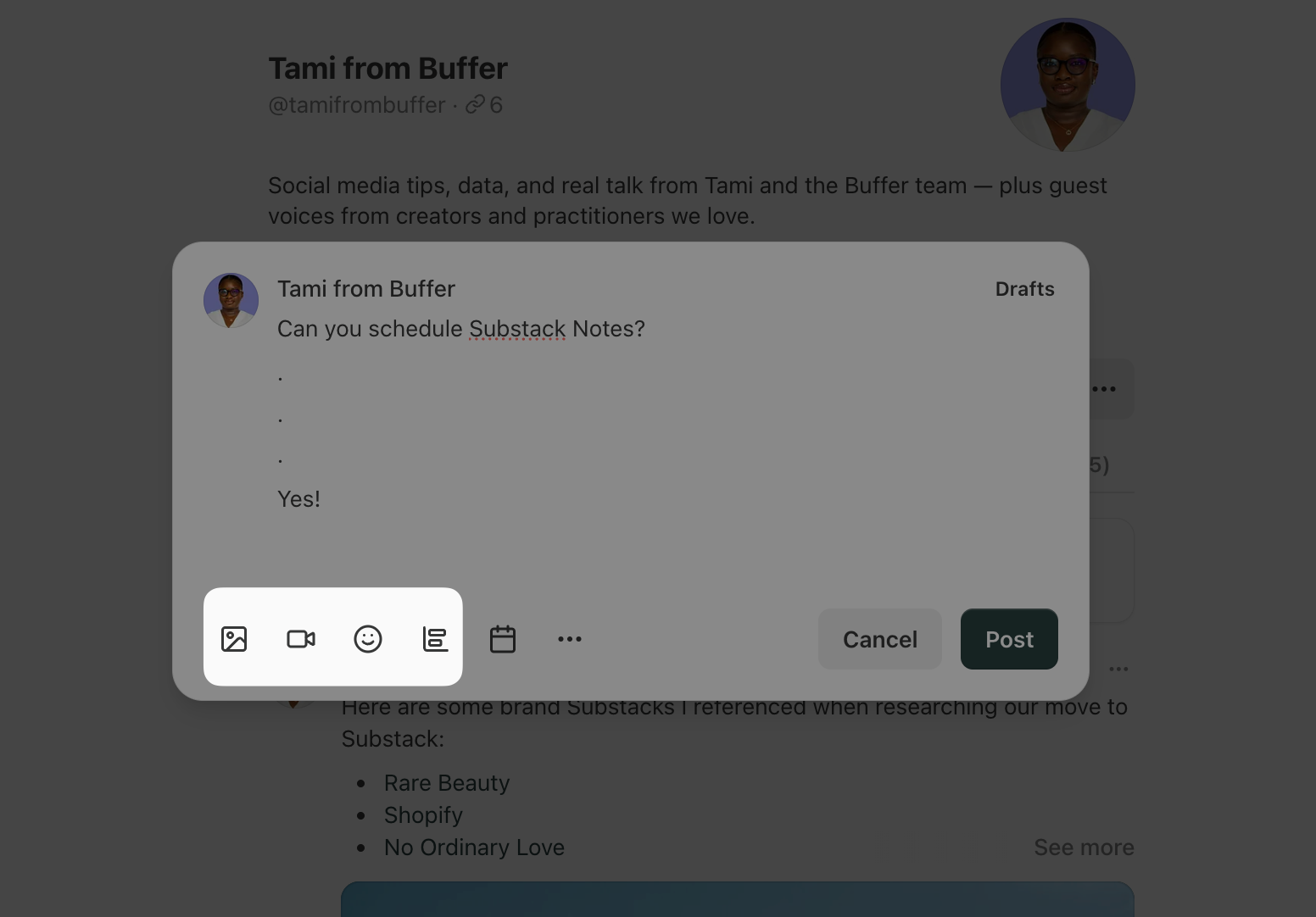
- Click on the calendar icon on the backside of the composer.
- Choose a date and time. Substack makes use of your native time zone.
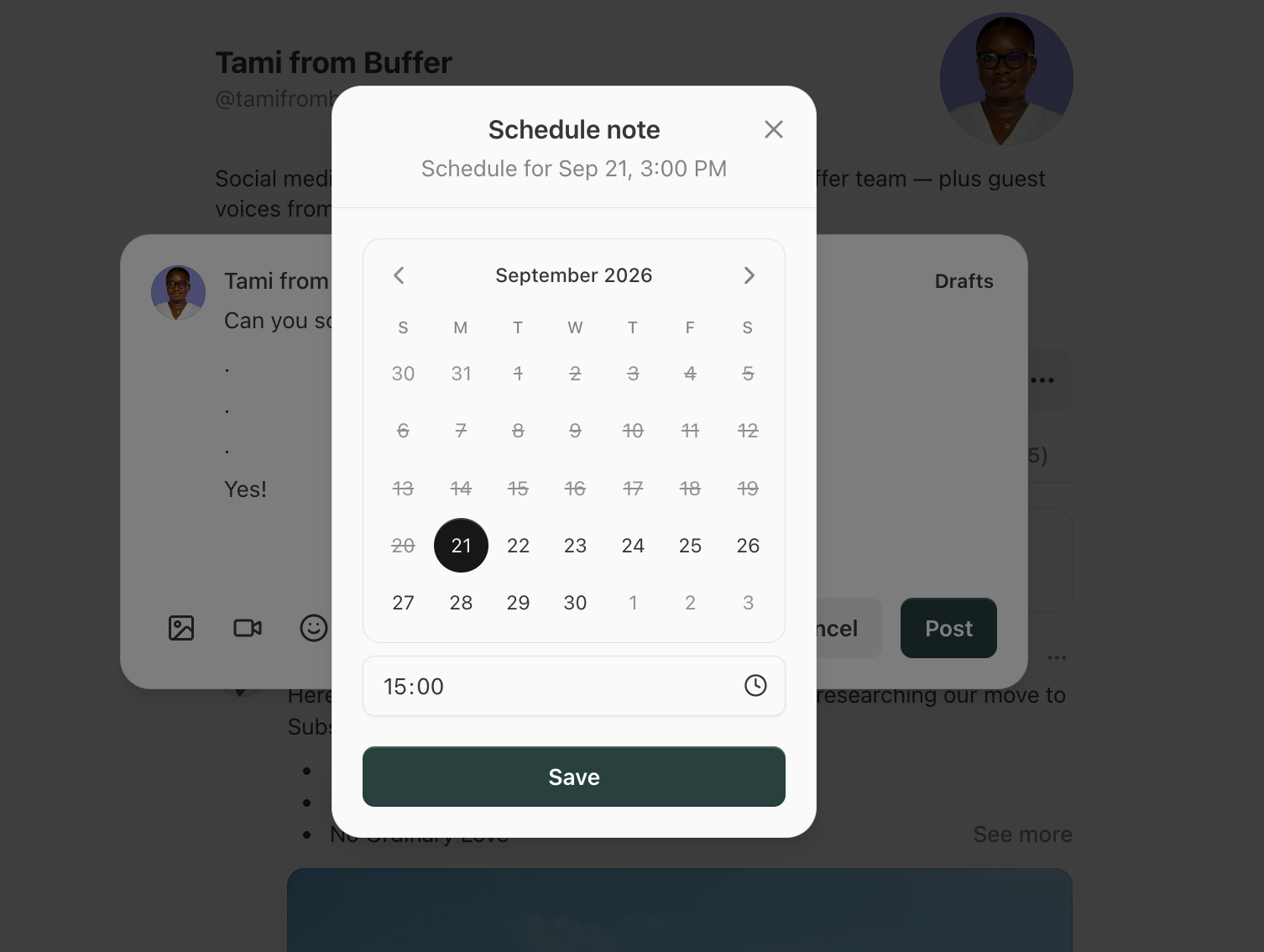
- Click on Save, then Schedule.
On the iOS and Android apps, faucet the plus + button to begin a Observe, write it, then faucet the three dot ⋯ menu and select Schedule.
Each scheduled Observe lands in your Drafts, with the publish time proven beneath. You’ll be able to open one from there to edit it or change the time earlier than it goes out. Substack helps you to schedule as much as three months forward.
What the native scheduler would not do
There is not any calendar view, so that you’re studying an inventory of drafts quite than seeing your week of deliberate content material.
It’s also possible to solely schedule one Observe at a time. And you may’t ship the identical Observe to a different platform, and there is no per-Observe reporting past the likes, replies, and restacks you may see on the Observe itself.
For a author posting a few Notes every week, that is fantastic, nice even. However as soon as Notes develop into a each day behavior, or certainly one of a number of channels you are maintaining with, it’s possible you’ll begin to need extra. And that is the place Buffer is available in.
Tips on how to schedule Substack Notes with Buffer
Buffer’s Substack integration is constructed on Substack’s official API, and it treats your Substack account like some other channel: join it as soon as, and Notes present up on the identical calendar and in the identical composer as your LinkedIn, Threads, X, Instagram, and Bluesky posts.
Scheduled Notes publish immediately on the time you set. There is not any reminder step or “finish this in the Substack app” notification.
- Log in to Buffer (or create a free account) and go to Channels → Join a channel.
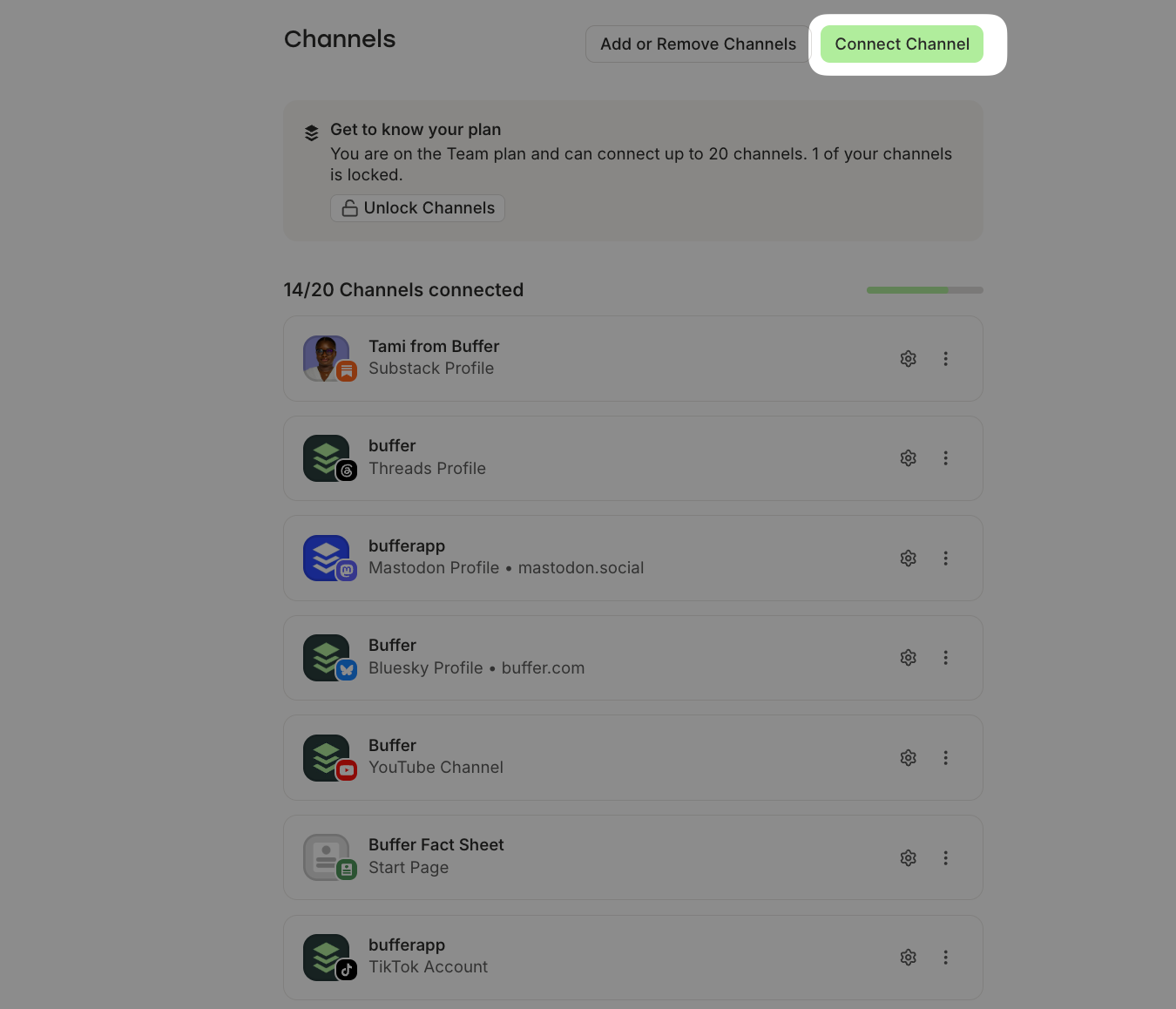
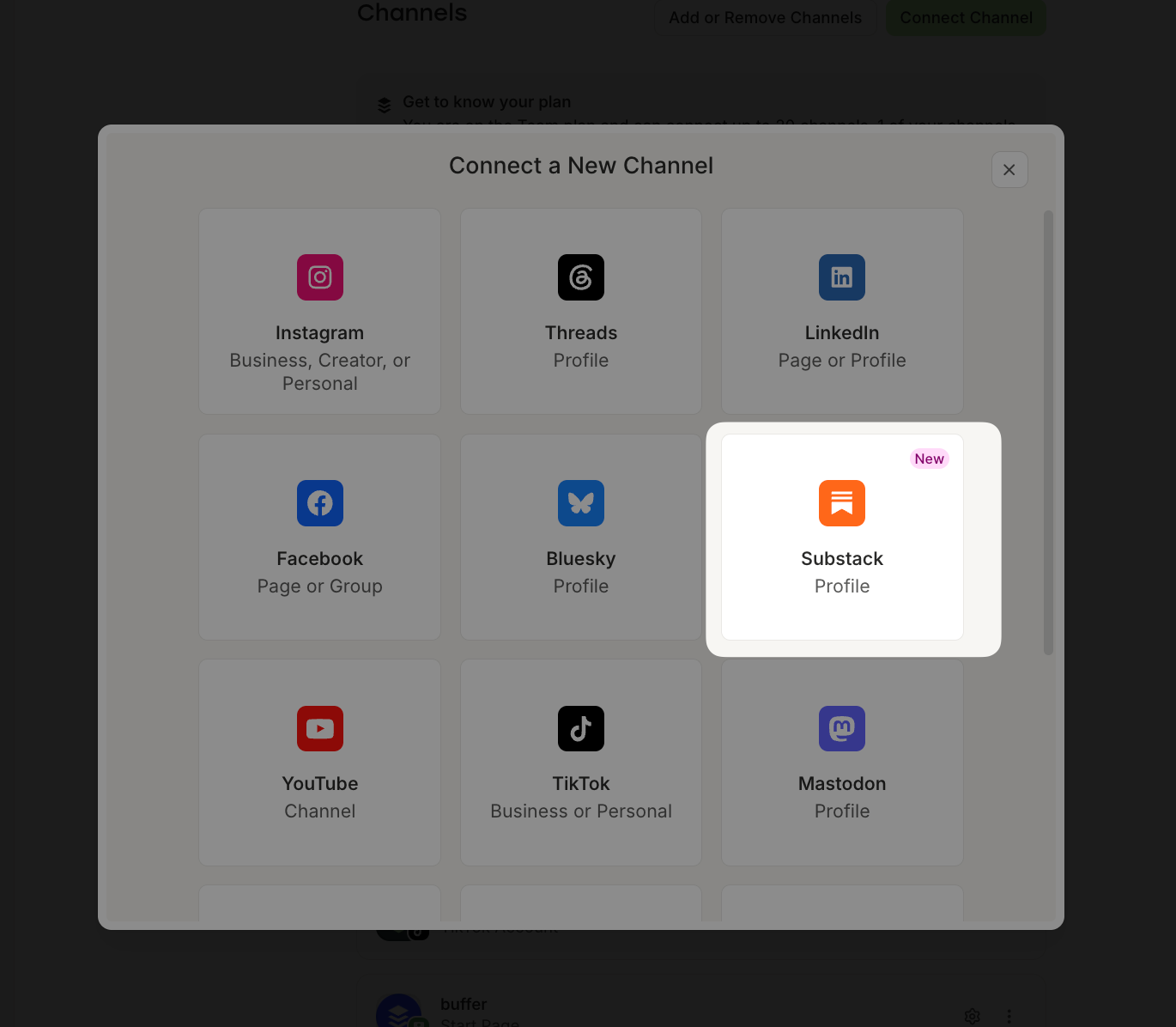
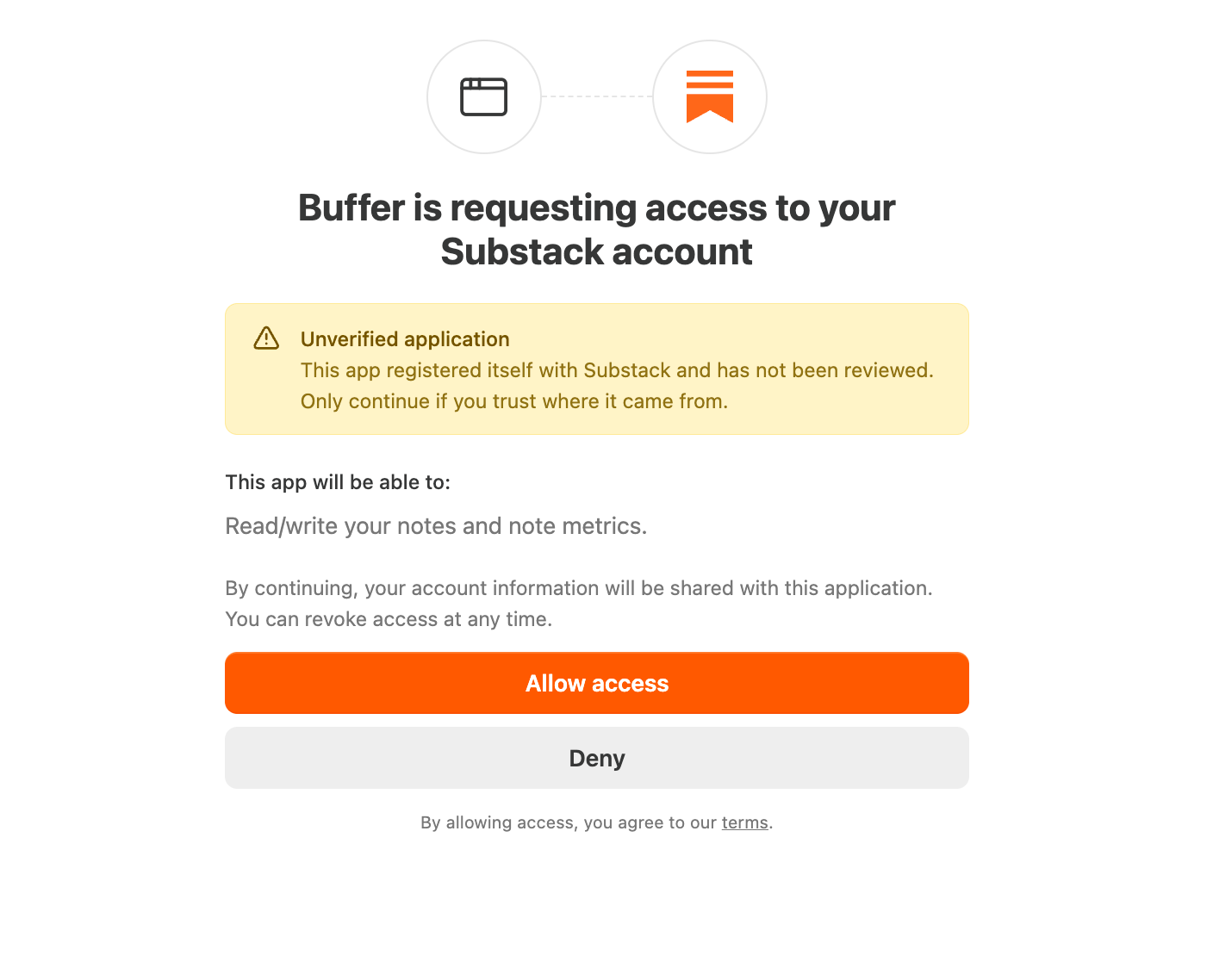
- Select Substack and sign up to authorize Buffer.
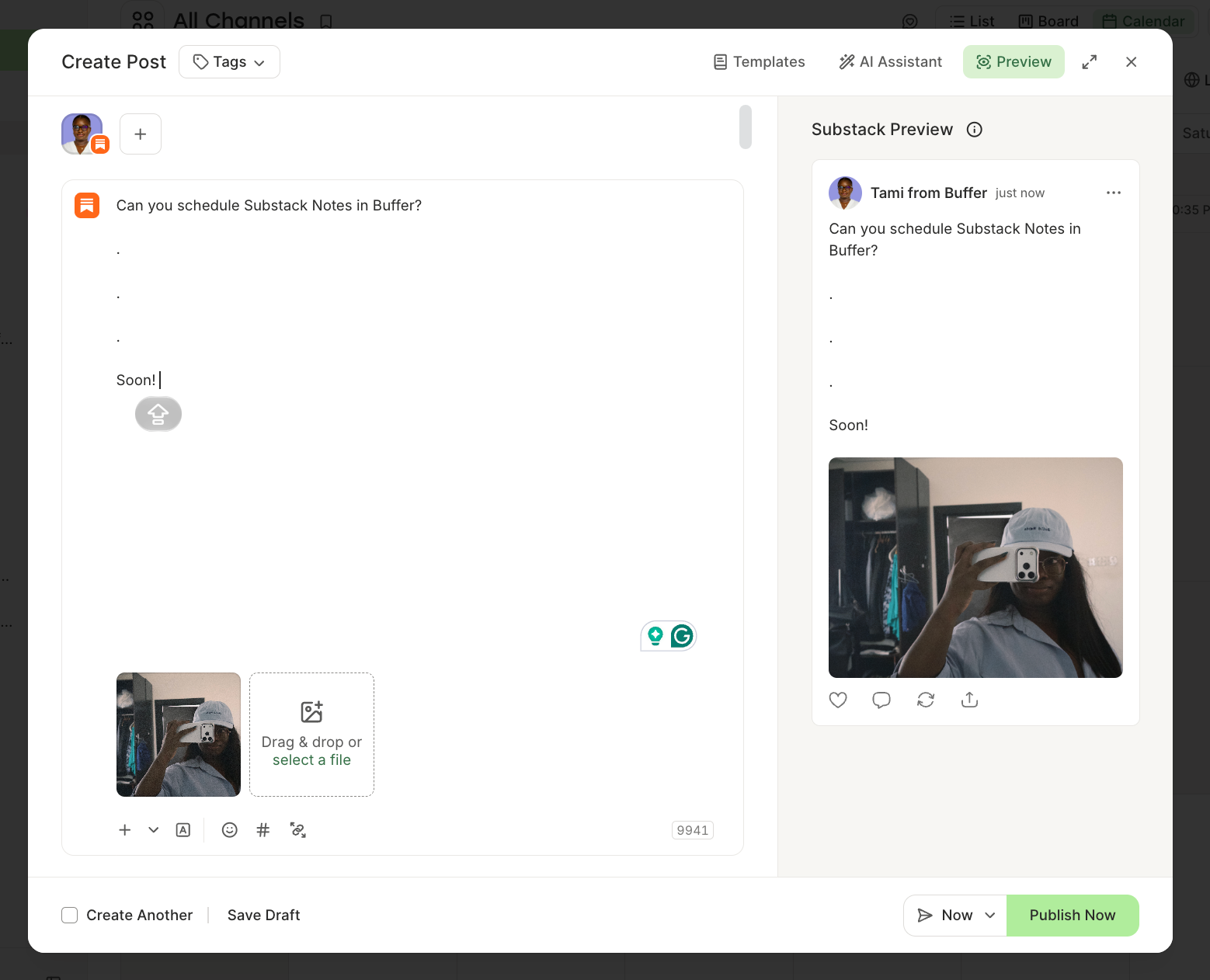
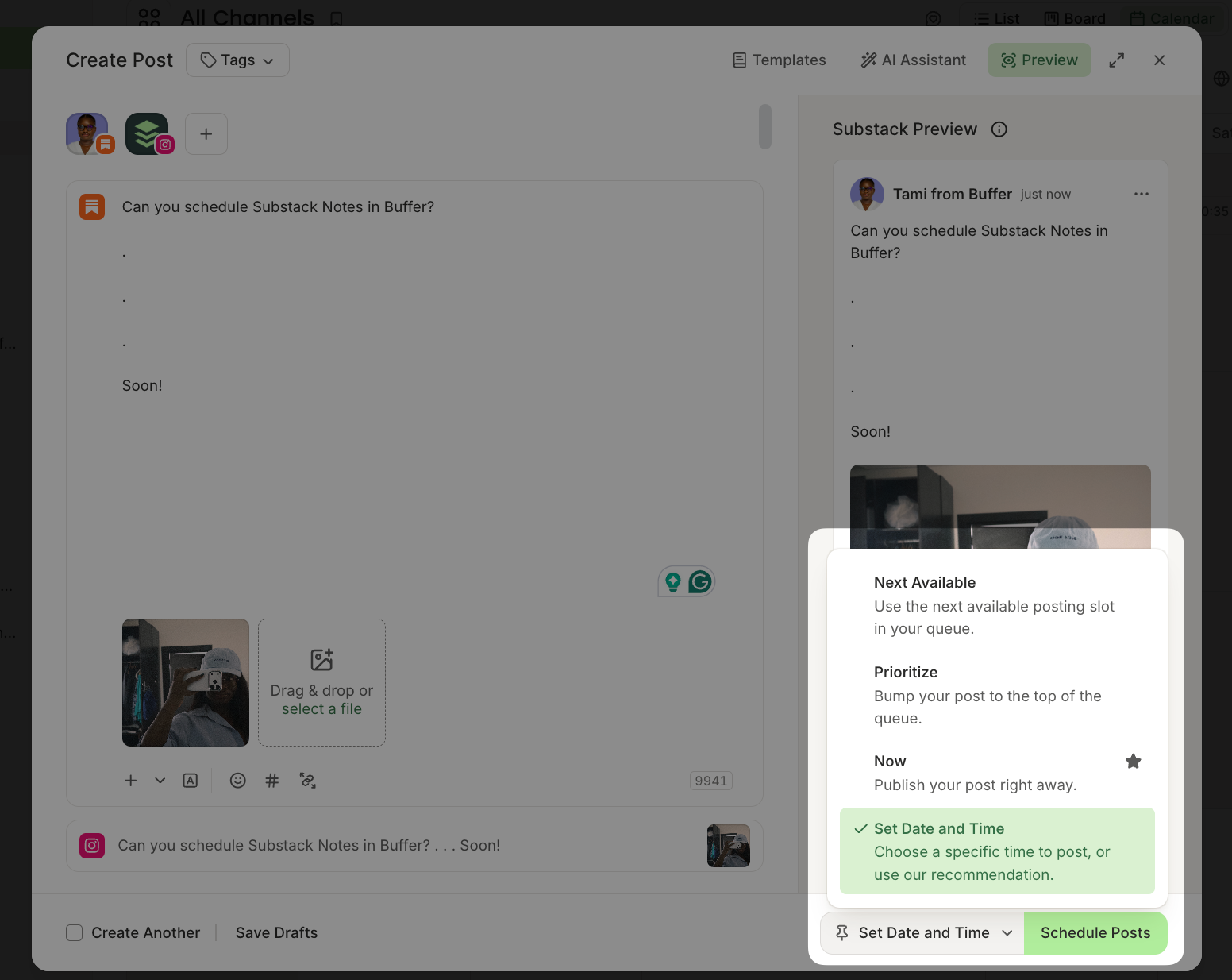
- Click on Create Put up, choose your Substack channel, and write your Observe. You’ll be able to add pictures, a hyperlink, or a video.
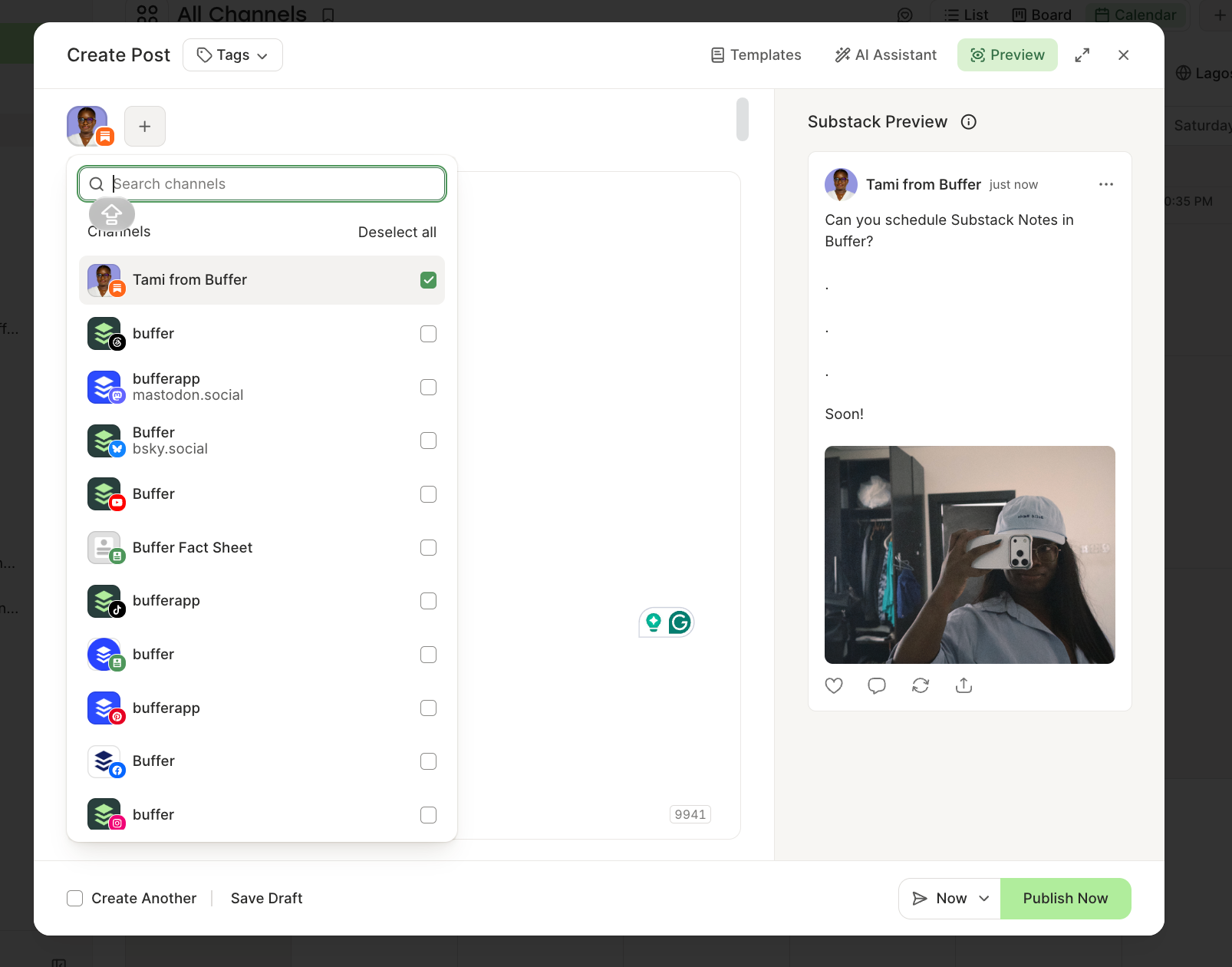
- If you’d like the identical Observe to exit to LinkedIn, Threads, X, or Bluesky, choose these channels too and tweak every model till you’re satisified.
- Choose a time (or use certainly one of your set posting slots) and click on Schedule.
As soon as a Observe is reside, Buffer’s analytics present impressions, engagement, follows, in addition to what number of free and paid subscribers every Observe introduced in.
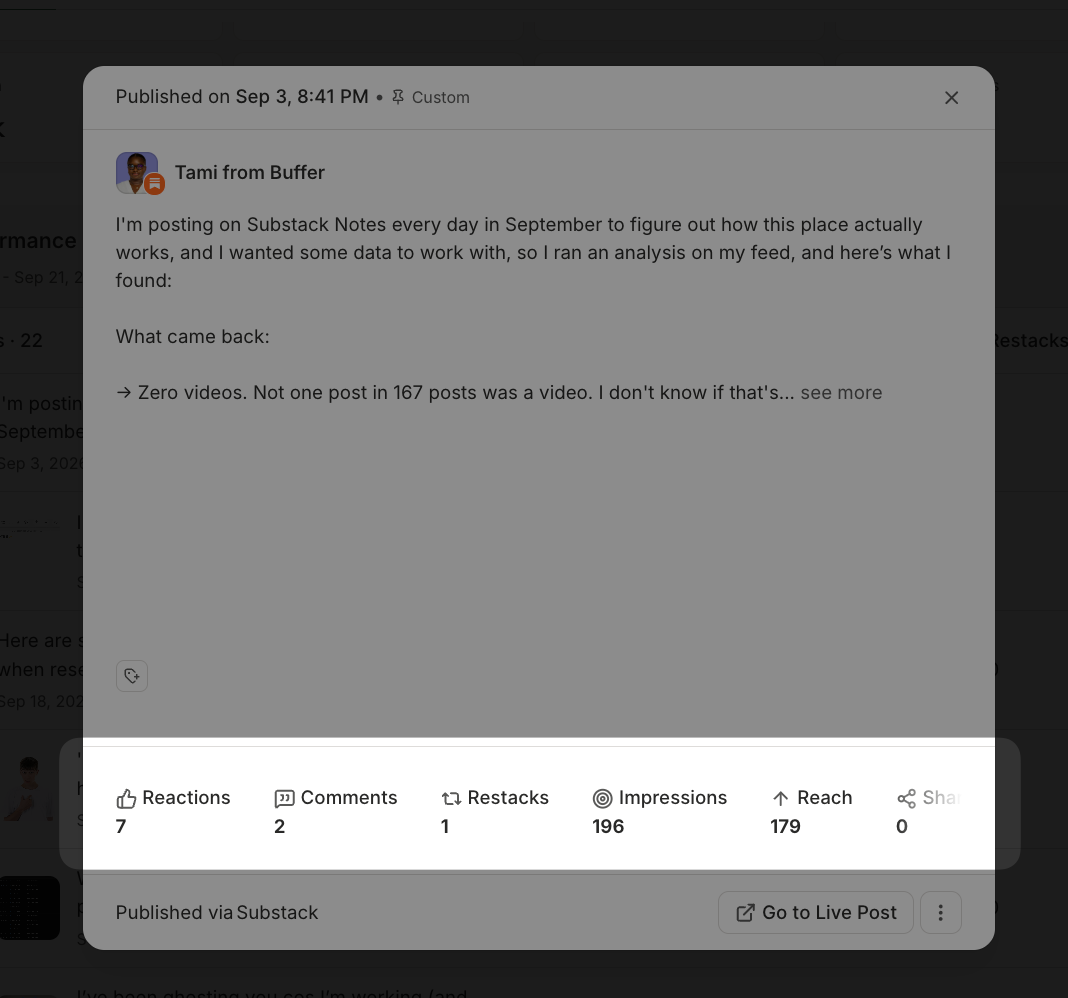
As a result of your different channels sit in the identical dashboard, you may put a Observe subsequent to the LinkedIn model of the identical concept and evaluate efficiency as properly.
Two extra methods to make use of Substack in Buffer
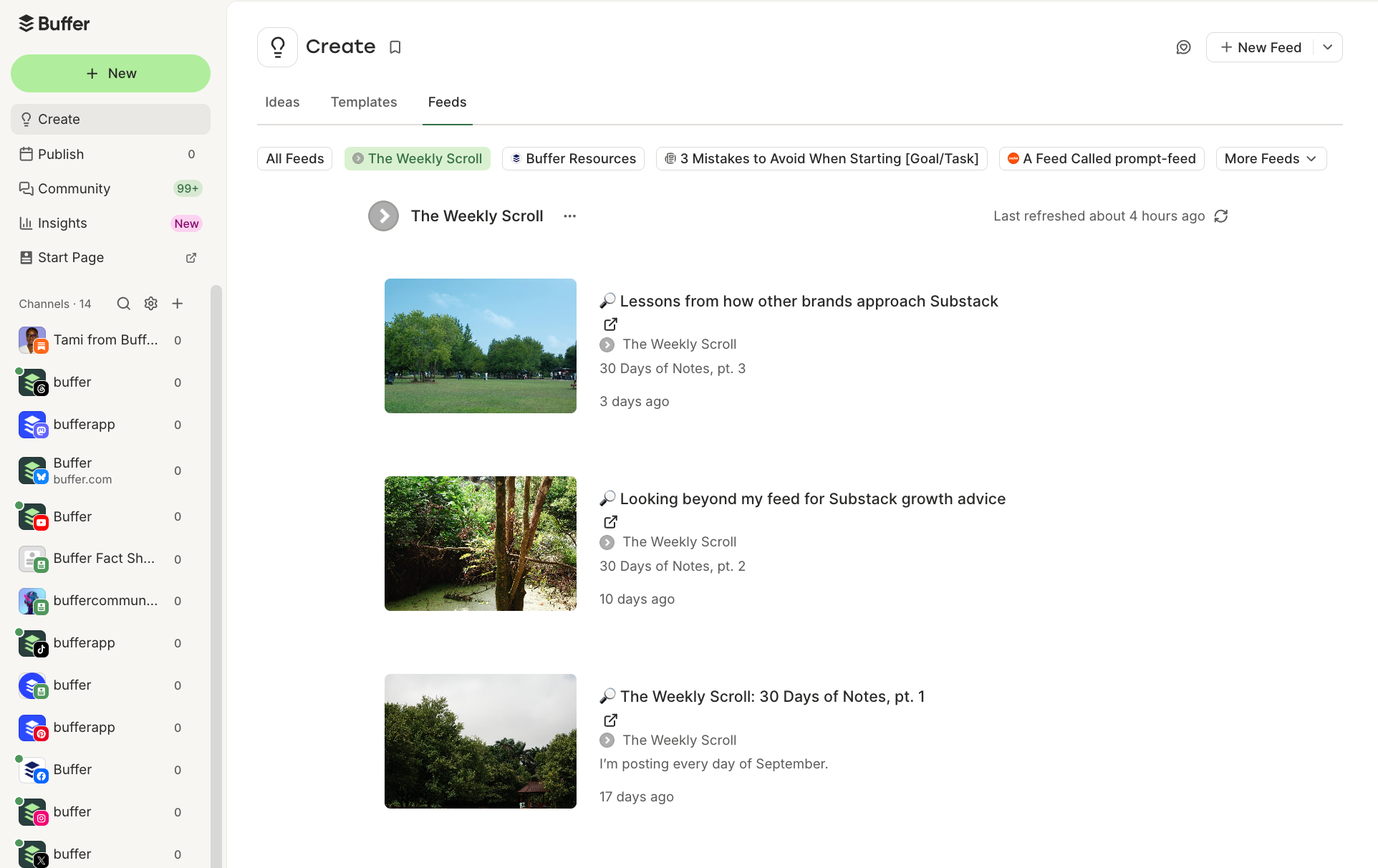
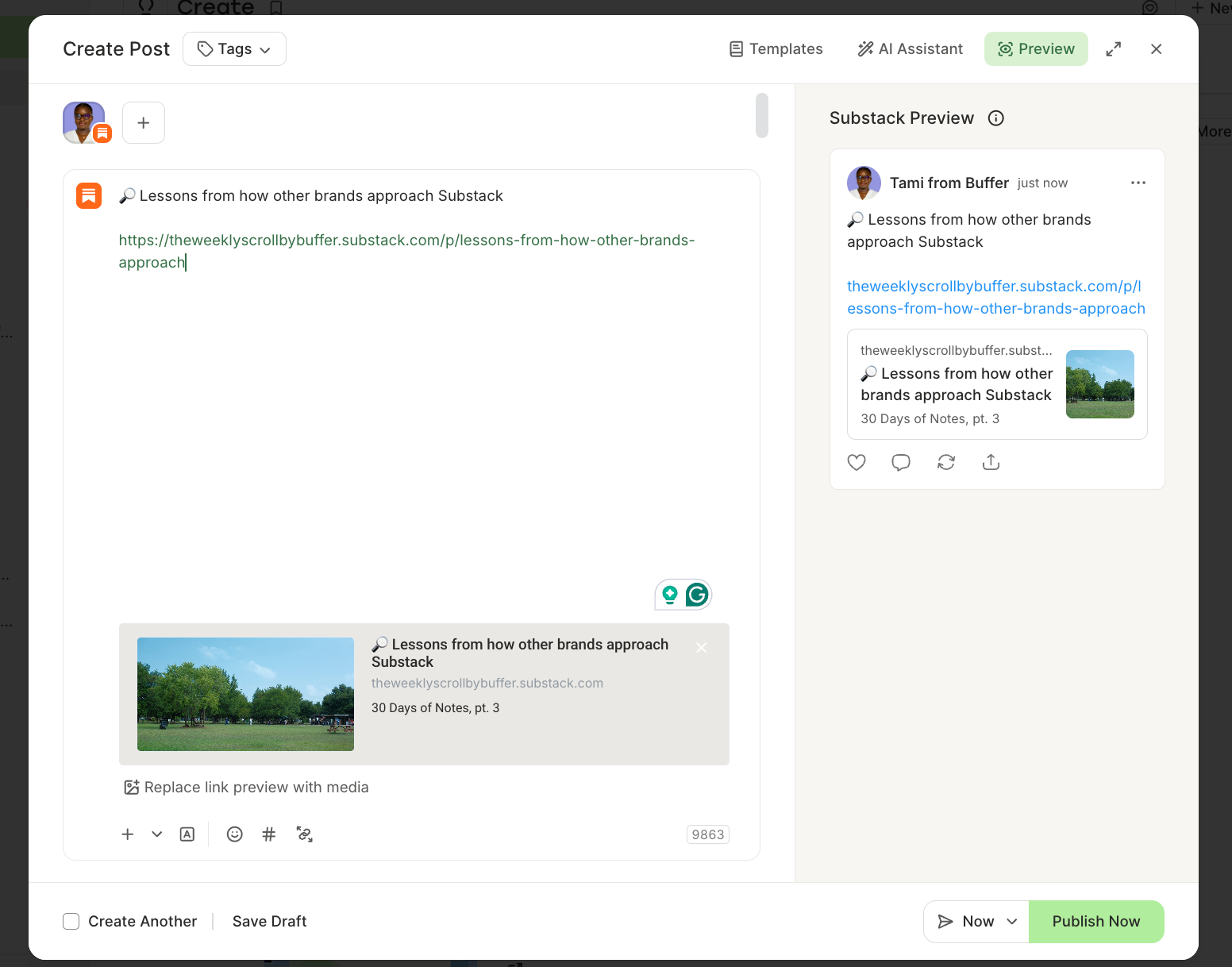
- You’ll be able to add your Substack publication as a feed in Buffer, which pulls your revealed posts in so you may queue them out to your social channels, or flip an previous publish into a brand new Observe weeks later.
- In case you work with an AI assistant, Buffer helps Substack Notes in its MCP and API, so you may draft and schedule Notes from Claude or ChatGPT or your preferred AI assistant.
Buffer’s free plan covers three channels with 10 scheduled posts per channel at a time and 30 days of analytics historical past. Paid plans begin at $5 a month per channel for limitless scheduling and full analytics.
What I’ve realized from posting a Observe a day
I run Buffer’s publication on Substack, The Weekly Scroll, and for September I have been posting one Observe daily. Along with scheduling, just a few issues have made it simpler now that Substack Notes are in Buffer.
- Batch the deliberate content material, depart room for spontaneous ones: I write and schedule many of the week’s Notes in a single sitting, however I hold a slot or two open to react to one thing within the feed. Replies and restacks cannot be scheduled wherever, and people are the Notes that begin conversations, so scheduling handles the consistency and I deal with the remainder.
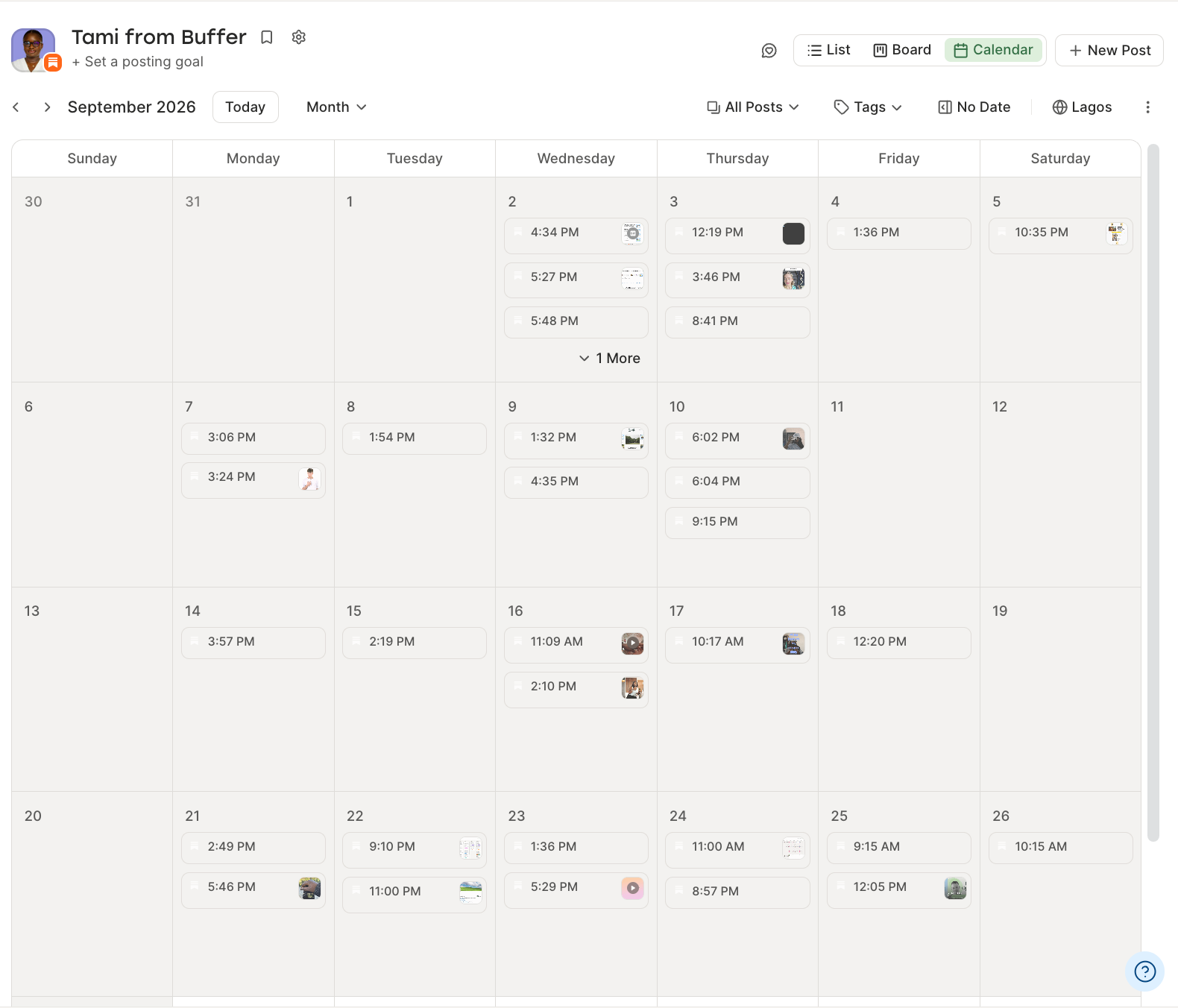
- Schedule for when your readers are round, not while you’re writing. Buffer’s posting slots make this a set-once resolution quite than a each day one.
- Maintain a working record of concepts. I hold my concepts in Buffer’s Concepts, then flip the great ones into Notes on the times I plan my posts.
Substack Notes scheduling FAQ
Is there a free strategy to schedule Substack Notes?
Sure, two. Substack’s personal composer schedules Notes totally free on net, iOS, and Android. Buffer’s free plan additionally helps you to join your Substack account and schedule Notes with out coming into a card, with as much as 10 scheduled posts per channel at a time.
Are you able to schedule Substack Notes out of your telephone?
Sure. Within the Substack app, begin a Observe, faucet ⋯, and select Schedule. Within the Buffer cell app, create a publish, choose your Substack channel, and schedule it as you’d for some other channel.
Are you able to schedule a restack or a reply?
No. Neither Substack nor Buffer schedules restacks, quote-restacks, or replies to different individuals’s Notes.
Are you able to add pictures, hyperlinks, or video to a scheduled Observe?
Sure, in each. Substack’s composer and Buffer’s each help textual content, pictures, hyperlinks, and video in a scheduled Observe.
Do scheduled Notes carry out worse than ones posted reside?
There is not any proof they do. A scheduled Observe publishes the identical method a guide one does, and readers cannot inform the distinction. What tends to matter extra is whether or not you are round to answer within the first hour or so after it goes out.
How far forward are you able to schedule a Observe?
Substack helps you to schedule as much as about three months out. Buffer has no time restrict on how far forward you may schedule a publish.
Are you able to schedule Notes for multiple publication?
In Substack, you schedule from whichever account you are logged into. In Buffer, every publication connects as a separate channel, so you may schedule for 2 or three Substacks from one account and hold the analytics separate.
Do you want a Chrome extension to schedule Substack Notes?
Not anymore. Each Substack and Buffer schedule Notes from the net and their cell apps.
Does scheduling Notes by way of Buffer break Substack’s guidelines?
No. Buffer’s integration is constructed on Substack’s official API in partnership with Substack, so Notes scheduled by way of Buffer publish the identical method they’d from Substack’s personal composer.
Choose a time and publish
In case you’ve needed to be higher about posting Notes, there’s now a straightforward repair. Write the Notes you already know you wish to publish, schedule them, and use the time you get again to answer to individuals.
Substack’s built-in scheduler is sufficient to begin. When Notes develop into certainly one of a number of channels you are maintaining with, and also you wish to know which ones truly deliver readers in, connect your Substack to Buffer and put all of them on one calendar. It is free, and you may schedule your first Observe in a few minutes.
